Showing posts with label philosophy. Show all posts

Sunday, May 10, 2020

DAY 57: Community Quarantine


    ENNUI- This is one of those days where I have this feeling of tiredness, not the physical one, but the thinking part. I don't want to think about anything anymore, even choosing what food to buy this morning froze me. 
    The routine, the repetitions, the recurrence, the pattern...it's mind numbing. But this also the time when the mind wanders off into the deep.  
     What if this is ever recurring, what if we all experience this before and is just reliving this infinite predetermined cycle.
    Even thinking about this makes me wonder why any one could wish for an immortal life. I mean, even in ancient myths and literature, the gods in their ennui with eternity go down here on Earth to meddle in human affairs, to play with their weaknesses and humble then in their pride, have affairs with their women, bore children, instigate wars, to test them,  participate and then die with them in battles to gain the poor mortals' adorations and worship.
   The absurdity of existence is something to think about. It is an exercise in futility that may lead to despair. Many people live and die without even thinking about it. Maybe they find the question utterly useless and what is important to them is the daily fight or flight for survival, or to avoid pain and engage their whole life in the pursue of treasure in order to live a life of pleasure. But does that cure despair?
   Thinking about this, even the end, the culmination of the promises of religion is the latter, an eternal life devoid of pain, eternal joy and ecstacy, no tears, the very opposite of what mortals' endure here on this little piece of rock that orbits the sun.
   Heaven's description in most religious scriptures is not transcendental, it is at it's very essence a materialistic pursuit of what was denied to most people in their short existence. It is the freedom from oppression, it is the liberty to enjoy what their earthly masters have taken from them and is denied to them.
   Answers varies with each individual, but I am happy for those people who have found it in their religions, in their beliefs, they have the meaning of their existence in the existence of a higher and transcendental existence. 
   In the end, when I think about religions, when I think about how humanity have died, killed, and done beautiful things in its name, one question remained to trouble me: all that for eternal life?
   How I envy people who can find rest and meaning with their beliefs.
   Sometimes I wonder how God will judge us. Will he be kind to the people who are lost, who ask a lot of questions, who doubts and lacks faith, will he come hard on them or will he smite them to burn in everlasting fire. Or like some human beings, he loves dogs and hates cats.

Sunday, September 18, 2016

Stranger things and the strangest thing of all the strange things in this strange thing


A couple of days back, I saw the pilot episode of Stranger Things on Couchtuner. (Do be careful when opening this site. It contains a lot of links that could lead to some nasty sites. Exit the false links first by clicking on the "x's" before clicking play) I was not hooked by the first two episodes because my impression was that it's going to be a stretched version of Spielbergs' Super 8 or  ET or something like that. 


I had this idea that the series is going to be about an alien that escaped a government facility and will end up being befriended and protected by a group of kids, and so on and so forth, and in the end the alien is reunited with its family back on its own planet somewhere out there in space. 

How do you stretch a story like that when the theme has been explored and has been expended by tons of movies and series about it. I guess, in the long run the series would fizzle out then be cancelled.

Last night, thanks to the abnormally fast internet speed, I was able to watch the whole of season 1 and I was hooked. 


I guess interstellar aliens and interstellar travels are becoming passe and more films are exploring the idea of inter-dimensional travel. The problem with interstellar travel is the vast distance between galaxies hence a conventional faster-than-light travel still poses a seemingly unsolvable problem since speed is subject to time, and even at FTL a star or a system billion of light years away would still take a very long time to reach their destination. 

 So a new method of interstellar travel had been proposed, and that is through wormholes. And wormholes, since the idea is to bend time and space, could result to inter-dimensional travel so that instead of travelling distances, what could happen is that the traveler could end up in the opposite plane, that is if time-space is a fabric, or to another parallel or opposite dimension as expressed in the multi-world interpretation of quantum theory. (This wayward travel from inter-stellar to inter-dimensional travel is explored in the movie Event Horizon.)


Stranger Things explores the idea of inter-dimensional travel. The mysterious character "11" possesses psychokinetic abilities which allows her to move things using her mind but her most interesting power is her ability to travel outside her body which gave her the ability to listen to other people's conversation making her a human "bug". But in her out of body forays, she comes in contact with an alien that inhabits the dimension.  

The government scientists studying and manipulating her abilities encourages her to make contact but in the process she accidentally opened an inter-dimensional portal that allowed the aliens to enter our dimension.


In the small town of Hawkins, strange things starts to happen. People disappears and the police are surprised when the disappearances are solved by state troopers. But when Will Byers disappears, his mother, brother and friends searched for him. The Hawkins police chief becomes suspicious and investigated Byers cadaver which lead to the discovery of his fake body and the government conspiracy to cover up the disappearances.

"Eleven" escaped the government research center where she ends up in the small town of Hawkins and befriended three kids who helped her. She reveals who she is and that it was she who opened the portal. The season ended with Bill Myers being rescued from the alternate dimension called " the upside down" and with Eleven closing the portal. A month later, Myers, in the bathroom, coughs out a slug and then experiences flashes of the upside down.

Some stuff...

Okay, so Eleven or El is able to travel between dimensions but how does she do it? Theoretically a lot of energy, some theoretical physicist even say it requires the power of  a star, is needed in order to create a worm hole. First, time and space must be warped and then a controllable black hole must be created in order to create a worm hole between the warped space-time fabric. 

In the traditional space-tech sci-fi this is usually solved by warp-engines but in Stranger Things, inter-dimensional travel is achieved by a different means, though the power of the mind. The background story is that in 50's a lot of experiment  was done by the US Government using people with ESP or with potential ESP with the help hallucinogens like LSD and sensory-deprivation-tanks in order to expand the abilities of the mind. And it is this scenario that Eleven's ability is introduced, she is the daughter of one of the subjects of the experiment and she is abducted or adopted by the laboratory to be its subject.

I guess it difficult to overcome the idea of thre separation of the body and the mind.

Anyway...

The concept is interesting, though this is not the first time this idea is explored because most horror movies i.e. if you removed the religious references, is really all about inter-dimensional crossings. 

Is it possible then that the story is a sort of a brain-in-the jar experiment and the whole reality or universe is just a virtual reality created by an organic computer, Eleven's brain. This is one explanation that I guess would satisfy the physics because if one mind could affect reality in such a way that it could open portals, think of the implications of having two or three etc. minds with the same abilities and the chaos it could create.  

Of course, this is sci-fi and I don't expect any real-life rules to work in it but it's supposed to make one to sit down and think about the unexplored part of our existence whether it be dark or upside down because there so much more to this life we live in than what we experience.


Wednesday, September 14, 2016

Coffee-rnican revolution in religion and why too much coffee drives me nuts

Okay, it must be the three cups of coffee I drunk this afternoon. Classes were suspended, it was raining hard and the temperature dropped, coffee was irresistible. The caffeine is still running around my head.


I have read John Hick's God and the Universe of Faiths

I have been thinking about what's in the book since I dabbled into theology, which I was never good at  by the way, a couple of years back. 

One of the things that I find difficult to wrap my head around about religion is the idea of exclusivity. Exclusivity is the claim that one's faith is the only true faith and all the other religions are false, that they need proselytizing and at it's worst enemies to be overcome or conquered.

Exclusivity is a mechanism used by a group of people, family or tribe or nation to preserve its cultural identity. This idea is associated with a local god or a tribal god. A good example of this are the Jews. By maintaining a unique relationship with their tribal god, they have fought off foreign influences.  They formulated codes and laws that encompasses the whole aspect of their identity. And these laws are written by their god himself and this made their laws inseparable from their god. 

With the destruction of Israel, the Jews were dispersed. They were scattered among the neighboring kingdoms but despite the dispersion, they have kept their identity. They have accomplished this through strict and rigid adherence to their laws and traditions. The Jews also forbade intermarriages. Adultery both religious and interracial marriages are dealt with harshly by banishment and even death. This preserved not only their culture and faith but it also assured the genetic conservation of the race. 

Their identity is inseparable and indistinguishable from their god: their religion is their citizenship.

Then came Jesus. Jesus was a Jew, a Jewish heretic. He professed to be the messiah introduced a new and improved version of Judaism which the old school rejected. he was crucified by the Romans with the instigation of the Jews.

A few hundred years later, Paul discovered Jesus and became the missionary that spread Christianity. Christianity is basically a Judaic religion,hence the idea of exclusivity, though expanded to include non-Jews, is still  at it's core. This exclusivity, like the Jews, assured its survival, But unlike the Jews, the laws and traditions, which was repudiated by the new testament, was too porous, hence pagan (which means non-Christian religions then) slowly seeped into the new religion hence many non-Christian doctrines were assimilated into it. 

The reformation came. 

The reformers broke away from the Roman Church which they deemed was corrupted by pagan and mystic philosophical thoughts. So, the Roman Catholic Church has stopped to be the only vehicle towards salvation. She is not the bride anymore.

The church split and with each split came the idea of exclusivity, with each schism and division, exclusivity becomes narrower and narrower that even among denominations there those who consider their brethren church not pure enough to be included among the elect.

Of course, in the book, John Hicks' discussed the relationships of Christianity with other world religions but it need not go far because within the Christian faith exclusivity is claimed by each denominations, though evangelicalism is a movement that seemed to be moving towards inclusion but in general it still a strict exclusivist because of their doctrine that only Jesus saves.

Exclusivity promotes the idea that the religion or the church one belongs to or born into is the only real church or religion  and this ecclesiocentricism denies the truths or only recognizes partial truths from other religions and treats them as inferior, even enemies. This is analogous to Ptolemy's idea that the earth was the center of the universe. The church becomes the earth in Ptolemaic universe and other faiths or denominations are revolving around that specific church.

The Ptolemaic view of religion, according to John Hicks must give way to the Copernican revolution. Instead of a religion or a church being at the center of the religious universe, it should be theocentric, God should be placed at the center where religions revolves around it.

This solves the a lot of problem from revelation to salvation. 

Anyway, I'm tired. Read the book or wait till I get into the mood and talk about Hick' ideas.

This post sucks.


Sunday, September 04, 2016

Dark clouds: I was expecting the Biblical Armageddon and Independence Day to happen


Sunday. 

Went to church in a good mood which I think was due to the good weather. I was listening to the sermon when all of a sudden strong cold wind blew through the church's window and temperature dropped which made me shivered.  

Looking out through the windows, I saw dark clouds merging into one pregnant super cumulunimbus cloud. My imagination was running wild. I was expecting the four horsemen to emerge racing through the clouds charging with their weapons raised above their heads ready to harvest the unsaved while the heavenly hosts' trumpet corps played the Battle Hymn of the Republic. Armageddon was coming upon us but I was sure that I would be spared because I am one of the elect, that's idea of belonging in a church, by the way. 

But it was just a burst of rainstorm. Maybe next time.


I didn't mean to be irreverent but I had no control over the visualization. Anyway, alien invasion did not kicked in. I guess the...never mind.

There were two things that kept me awake and praying at night when I was little. One was the rapture. I had nightmares about being left behind after the Almighty, in a blink of an eye, teleported all the elect into heaven leaving the dammed to be marked by the beast or, to get another chance to be saved,  by dying in defiance of the anti-Christ. 

This fear was reinforced by rapture and hell movies used by American missionaries to scare the hell out of Filipinos into accepting Jesus as their savior. 

But after the doctrine of assurance calmed my fear of rapture, I was struck by another phobia: fear of alien invasion. 

Thanks to TV series like Space 1999, Battlestar Galactica, Twiligh Zone, Buck Rogers, I spent many nights looking out our window expecting lights to come down from heaven and little green men or metallic centurion to come charging and rounding up people in the neighborhood. 

The idea of being hit by a disintegration laser beam or being host to alien spores gave me nightmares. I guess the images from movies and TV drove my imagination into hyperdrive. 

I think that's one reasons why my notebooks were full of intergalactic battle drawings. I remember my grade three teacher checking my notebook and making a face at the saucers and space battleships exchanging cosmic rays and missiles. But ironically, I see the same drawings from some of my pupils now.

I grew up and with it the fear just went away. That's why I find it hard to relate to religion that preach fear in order to entice or to coerce people into accepting their doctrine or their church. 

They paint this bleak picture of humanity, of life, their insistence on the reward of eternal life and the picture they paint reflected the worldview of their holy books writers' age.  


Well, anyway, same old, same old...How I wished I was a gullible child again.

Friday, September 02, 2016

Is there "Forever"? An inquiry into the mystery of "forever" with my Grade Six pupils and how they proved Wittgenstein's language game theory

Lunch break was almost over and I had collected my pupils and asked them to settle down while I prepare to give them a seat work till the next teacher arrives.

But there was a debate going on in the other side of the class room. I overheard words like "I don't believe in forever; I believe in destiny." There was agreement and, also, there's protest from another side. These kids can be passionate about stuffs they hold on to, young and naive as they are, that they'd go as far as outshout their opponents.

So, to put a stop to the arguments, I stood up and told the class that there is "forever." There was an uproar especially among the girls. They were adamant that there was no such a thing as "forever." It was unbelievable and crazy, almost religious fanaticism.

I backed off, lest I'd be mugged by children. 


I knew how I'm going to attack the issue but I needed to chill the room's temperature down. 

"You!" I pointed to a pupil, "stand up and in the front and bring your dictionary!" To which Mark obliged with a smile. "Look for the word 'Forever'!". 

"Forever: magpakailanman." He read. 

"See, there's forever in the dictionary!" I said. 

"That's not true!" The class shouted and I'm starting to feel that my logic was useless against their almost fanatical belief.

'Why?" I pleaded. "The dictionary proves it."

"Sir, that's not true!" Ellis protested, he's one of the leaders of the anti-"forever" group. "Why?" I reasoned and the answer was a loud denial of the authority of the dictionary.


"Ok, children, listen to me. Words are there because they point to something. Example, a dog, there is a word 'dog' because there is a dog. If there is no dog, then there is no reason to have the word 'dog'.

I wrote the words "dog" on the board and put an arrow to a "real, true dog." See, dog: dog. Or cat: cat.

Again, Ellis, Jerish, Lara and the rest of the gang refused to accept my argument. "You cannot touch and see 'forever' like a dog!"

There goes the analogy. The problem with this argument is when abstracts are introduced. So, my picture/representation-meaning argument was starting to crack.

But I persisted, "can you touch love?"

"No," a short retort.


"But is there love?"

"Yes!"

"Then there must be forever!"

"No!"

"Why?"

"Because it's not true, and there's no forever."

I could not get through and if I persisted with my arguments and analogies, well just go into full circle again because it seems they couldn't and wouldn't accept reason. 


I am tempted to go into a long discussion about abstract nouns and why even though they do not exist in the concrete they do exist as a concept. 

Like unicorns, though we know that unicorns do not exist yet they are composite of things that exist: the horse and the horn. 

It is the same with forever. Though it is not real, or it has no concrete existence, yet it exist, as a concept at least, because we know time, we know the concept of time and we are subject to the reality of time. We are finite; we know things end; we know people die; we know things don't last. "Forever" is simply an antonym of these. 

But, I'm talking with children and even if I explain this to them, I didn't think it would work.

As a last resort, as was practiced by the Greeks and adapted by modern democratic countries, I am bringing the issue to the people. I conducted a plebiscite among my pupils to determine whether there's "forever" and otherwise.

As i expected, I lost. Though I had few votes especially among the boys, I knew it was a sympathy vote and nothing more.

Here's the thing:

I knew that I will never be able to convince them that there's forever. No matter how I try and what I reasoning I use because we are talking of two different things. For me "forever" is a word, a concept. But for them, "Forever" is a soap opera. Their phonetics of "forever" they learned from the plot of the telenovela "Forevermore." The semantics is a distillation of the failing in, falling out, fighting for, love affair of Liza Soberano and Enrique Gil.

This is why, for them, "forever" will never be true because for them "forever" is a telenovela.

We're in a different language game.


Well, at least I tried.


Friday, November 13, 2015

Should Christian students stop studying philosophy and literature? A meandering into the irrational fear of philosophy and literature


I have been thinking a lot...

Well, when its painful to stand up and all I do is sit in front of the computer, there's no choice but to think and to keep my mind off my excruciatingly painful ankle and knee, gout. 

I guess that's why many famous philosophers are either too rich to care about money and the daily grind, or are too poor , eccentric and unmarried to care about anything except thinking of and thinking up crazy stuffs.
Diogenes. He proved that anyone could be
poor, crazy, wise, an a-hole and be
intellectually  intimidating at the same time.
Legends has it that he scolded
Alexander the Great for disturbing his sun bathing.


Anyway, I have always been bothered by preachers on TV and behind the pulpit who say that philosophy is bad. Sermonizing about its evil and discouraging students who are into it as a part of college course. There are even preachers who discouraged reading literature! Whenever I hear this phobic vituperations against philosophy and literature hurled from the pulpit by a preacher, I guess being a teacher, I have this urge to stand up and throw a tome to the preacher's direction (maybe the head) and tell him,: " what do you want us do? Go back to the stone age!".

I am not a student of philosophy. My dose of philosophy was the prerequisite philo I and philo II in college which i heard was already taken off the first year and second year college curriculum for education students.


Nietzsche. Just a mere mention of this
guys name sends shivers down many
pastors asses. Why? Because he made
famous the slogan "God is dead." Which
many Christians believed was the
ultimate blasphemy, a judgment made without
 having read and analyzed some of his books.
Actually, he also killed God but this
death of god is not like stabbing a person
 with a knife and taking his life which
many preachers would like the 
congregation to believe is what this
guy meant. What he meant and what is
actually a reality now is that god has become
irrelevant. Doubtful?
May I ask how many Christians still 
believe that if you curse the name of God
you'll die in your place. 
All I could boast was that I read some stuff about it especially the Greeks because these pioneers were the most accessible read. The only modern philosopher that I could say I read and understood (maybe the more appropriate word is "felt") was Nietzsche and this was because he wrote in bursts of colorful language using lively meter. His writing could shock anyone specially to the first time readers. His attack on Christianity was distilled from his experience with the hypocrisy of Christianity's actions in the background of the political situations of his era that gave birth to his philosophical nihilism (again, he hates Christianity and the clergy, ministers and pastors but he had an affection for Jesus, at least not the same hatred for the clergy). Also, his father was a minister. guess he experienced Christian hypocrisy in the first person. he was not mad, he died mad because he got syphilis.

I tried reading Kant but it's like chewing concrete blocks.

But if there's one thing that endeared philosophy to me, it is inquiry. It's the activity. it's the way philosophy can empower an individual to pursue an idea or anything using pure reason.

Religion has always been hostile to inquiry even internal ones that would challenge the existing status quo, not to mention the tortures and persecutions. It's not because they were afraid of the changes that may come from new ideas or discoveries, it's because the religious feel, which was rightly so, that their authority and hold on the people would be compromised because their power and authority was primarily based on the perceived divinity of their books, hierarchy and lineage and secondly this hold was empowered by the ignorance and the lack of imagination  of the people. They tried to stop the enlightenment but failed. Today, the religious has to take a different tack to spread their religion. They cannot rely on their perceived "holiness" theological dogmas, moral superiority and metaphysics to lure people back to their fold, now they have to engage them in decent intellectual conversations, prove that their religion is relevant to today's settings. 

knowledge is power!

Many preachers love to quote St. Paul in Colossians ‘Beware lest any man spoil you through philosophy and vain deceit’ (Col.2:8). What was Paul talking about here? just like today, in St. Paul's time, philosophy could mean a lot of thing. It could mean a specific philosophy like stoicism, epicureanism which Paul had some dealings with. Or it could also mean religions, which in this verse is the case."See to it that no one takes you captive through hollow and deceptive philosophy, which depends on human tradition and the elemental spiritual forces of this world rather than on Christ."


knowledge power! Pinoy version.
This guy knows a lot of stuffs.
He had a lot of herbal formulas
for longevity and preventing diseases.
Ironically, he died of heart attack
atthe age of 56.
Philosophy even the ancient Greeks have very little room for spirits and traditions. This verse is a general warning for anyone not to be hooked on anything that challenges Christ. 

The New Testament was written in Greek, immersed in Greek culture and though many denied but a lot of terminologies and concepts used by Paul in his letters were from Greek philosophies. It's wishful thinking to say that the new testament was written devoid of any Greek philosophical influence.

Many religious will disagree but it is undeniable that most of the language used in the formulations of highly abstract Christian doctrines borrowed a lot from Greek philosophy. Ironic.

(My ankle and knee is killing me.) 


Friday, April 03, 2015

Good Friday and Death, Ressurection etc....

This is one of those days.

Boredom is a good thing for it makes me think about boring things: death and resurrection. 

Since this is Good Friday, and the music playing in the barangay's PA system is a soundtrack from the cenakulo, lots of horns, timpani, etc. kinda put me in the frame of mind because this is what is lent all about: death and resurrection.


I am already in my middle age and the idea or the reality of death is already in the peripherals of my mind. It's creeping in and there are times that I have dreams about death, not nightmares but more of a feeling of disassociation or flying and fleeing from reality, like a ghost. There's nothing scary about being extinguished in death, what is scary is the idea of the consciousness surviving into the unknown.

I remember having nightmares about death. Hell has been so hammered in my mind that it left me with an morbid fear of death, or  going to hell. But death is a reality that will come upon everyone; it is the great equalizer. The idea that there's a place out there where the good would be rewarded and the veil would be punished is comforting but as to their reality...I guess that's beyond proof.


We don't know what happens after death. No scientific instruments have been able to probe into the afterlife and no one has been able come back from the afterlife to life and describe what is after after death. Sure there are many reports about near death experience (NDE) but there are many explanations for the NDE's out of body experiences, hallucinations from the anesthesia is one of them. Or people coming back from death but it's never been scientifically proven that these people really died. 

The fear of death is really the fear of the unknown. One way people have dealt with death is by looking at it spiritually. Death is the crossing from the physical reality to the spiritual realm.  I think most religion have this feature in their belief system: life after death. 

Not only is life after death all about existing into another realm of reality, it is also predicated on the idea of rewards and punishment: morality. Remove the idea of heaven and hell from religions and they will die quickly and permanently. Religions exists because they play and prey on the believers hope for immortality in heaven or nirvana or its equivalent. This is the real foundation of religion: fear. 

Remove the object of fear and you remove the fear. of course the act of removing this fear is difficult because the fear of death and hell has been deeply ingrained in the psyche. But there are those who have overcome this fear and have lived an exemplary moral life, in fact it could be said that they lives a life holier than than that of the believers. The idea that the deletion of the idea (or reality) of heaven and hell would lead to an amoral and chaotic society is unfounded.

Death is real. Do we think about it? It cannot be helped...

Resurrection?

Immortality is something to think about and it is quite tempting. I am not going to ask whether it is true or not, I don't want to offend my fundamentalist friends. 

The question is: what is special about it?

There's eternal repetitions. Going back to the same experience again and again and imagine this happening to you in eternity.

What gives meaning to life is its temporal limit.


Anyway...there are a lot of things to think about life and death but as it is, we are existing in this world without our choice. Our circumstances are but product of accidents (or designed by God if you're a religious). Whether we believe in life after death , resurrection, eternal damnation, or annihilation, doesn't matter for now.What is important is that we live, we go about our lives. What we do with our existence would provide meaning for it.

Or...life is absurd, which fine with me too. Causality is just a mental construct.


Monday, September 17, 2012

Schopenhauer: Will


I have been reading a little about Schopenhauer. I was sort of chipping away at his book, the World as Will and idea. 

Schopenhauer developed Kant's idea of the thing in itself. Kant thought that beyond our perception and experience, there is an underlying reality which is beyond the grasp of our understanding: "understanding cannot go beyond sensibilities." this underlying reality is what Kant called the "thing-in-itself." Simply put, what we see is what our mind make us see. A chair looks like chair to us because that's how our eyes perceive it, and this is how our mind process the perception but the chair is not limited to what we see. The chair has properties that our senses and our mind cannot perceive because of the limitation of our senses and our minds  and we cannot go into the "thing-it-self.". Our understanding is like an a air-jet. The higher the jet fly to the atmosphere, the lesser air it gets and in the process, it will crash and burn. (Heard this from Prof. Cahoone).

Schopenhauer thought that the underlying reality was the will. (Other philosophers, especially the idealist, proposed  mind/s, or ideas, as the underlying reality.)

The Will is the thing-in-itself. Schopenhauer's Will is not the individual psychological will, but a universal metaphysical principle, spaceless and timeless and uncaused, even as Hegel's Reason, as he held, is not merely an individual function. The Will, says Schopenhauer, manifests itself in the individual as impulse, instinct and craving. The Will, again, it is that appears as consciousness and body. Thus the true self of man is identified with the Will.
Everything in the world, too, becomes an expression of the Will. The world is Will and Idea and has no independent material existence. The Will is above the Idea and is the only reality. The Will is blind, unconscious, and the Idea which is conscious is only its appearance in the intellect. We see nothing anywhere except the Will and the body which is the expression of the Will. Right from unconscious matter up to the self-conscious man the Will alone reigns supreme. It appears unconscious in something and conscious in another. It is all strife, activity, yearning that we observe everywhere. Desire is the cause of all things. With the Yogavasishtha, Schopenhauer would say that there is the eye because there is desire to see, there is the ear because there is desire to hear. The body and bodily functions are the expression of the Will. The digestive organs are the objectifications of hunger, the feet of the desire for movement, the brain of the desire for knowledge. There can be no body, and no world, without the Will. Longing, craving, or function, determines the nature of being, of the kind of organisation which becomes the body of the Will. The Will-to-live is the root of all things. It is the cause of struggle, suffering, pain. The Will is the great evil that accounts for the misery of all beings.
Schopenhauer's concept of the Will is fascinating. The Will is the Reality and it is blind urge. Consciousness or intelligence is its phenomenal effect made manifest in higher organisms in order to pave the way for the work of the Will in the world. For Schopenhauer intelligence is not the essential nature of the self. It is only a production of the brain created by the Will for its own purposes. Consciousness is an appearance, Will the Reality which is the immortal force that never dies with the death of individuals, never perishes through change. It may manifest itself in a mortal shape as individuals, but it cannot itself cease to be. The Will is imperishable being. (Swami Krishnananda)

Sunday, April 29, 2012

Who am I?

I read my nephews post asking this question: who am I?  A question I have asked myself to which I identify with my nephew.

While reading, I hear in my mind's ear the song now being sung during drinking sessions "Who am I?" (sounds like Creed to me) by casting Crowns. Lately, I have been hearing these "Christian" and Hellsong errr...I mean Hillsong praise and worship music being sung during drinking sessions and this gives me that strange feeling, a cross between shouting blasphemy while saying praise God for the bums and the alcoholics are being reached out! But depends on which side of the planet one is on, as for me, who cares! 

Maybe this and maybe that, but I don't know if the Holy Spirit of God can work side by side with the spririt and spiritum of San Miguel Beer and Gin to bring about repentance and salvation. But just the same, maybe in their hour of hang overs, head aches, expiration (of the alcohol and what have you's effect) and flash backs these people may come to the realization of the lyrics that they were singing and in that hour of vulnerability the Holy Ghost could do his works...who knows. 

But they may simply be singing because they like the melody and the guitar riffs, the basslines, and the drum rolls and none of that spiritual blah, blah,blah...


                                                            Who am I? (Casting Crowns)
                            

      When I first heard this song, I thought this was a Creed song. Good song and I understood why it became popular: the lyrics and the style.


How many times have I heard, the most popular of which was Rick Warren's "Purpose Driven Life", that who we are is that we are God's children and that our purpose is to worship, serve, surrender--our existence is grounded upon God, the ground of our being  (Tillich), the fact from which all facts arises (from CS Lewis and I don't like the way it sounds) and that our existence is not an accident, blah, blah, blah...words that could inspire confidence and to some may prove the final answer to the question of existence: the Bible drama, so to speak.

But it would be dishonest to say that this is not the case for many who asks about the existential-ontological question and for some this answer maybe or is worse than saying our existence is an accident because the God-answer smacks of determinism and helplessness in the face of planned existence as opposed to the existentialist's understanding of an absurd but free existence: we are who we want to be (or something like that) as Sartre expressed it. God: Purposed but Determined; Accident: Absurd but Free. The existentialist believes that the latter is the brave choice to which I agree, to some extent.

I don't know, up to now I still ask this question and if one really delved into this kind of thinking or asking, the mind would go into a loop an endless loop which may prove unhealthy in the long run. Our existence is determined, as can be seen by the laws of nature that governs our existence, but this is not the whole reality because there is also an element of indeterminism at the sub-atomic level of our existence, so, there are two seemingly opposing realities within and without us both working harmoniously. 

Anyway, the problem is not really the question, it's really how we think. Our mind has been programmed to thinking in an either or manner that we cannot accept or it has become counter intuitive to think of possibilities existing at the same time. 

Who am I? To quote God: "I am who I am." 

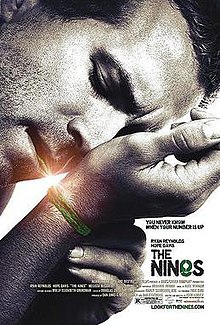
Doesn't matter...watch the movie The Nines starring Ryan Reynolds and be entertained how the question of existence was tackled.


I don't think life would be fun if we all know the answer...

Wednesday, March 14, 2012

Guitar and memory (not that memory)


For sometime now, I haven’t touched my guitar because I’m quite busy with school; I am in charge of the graduation practice and simply asking about 300 pupils to fall in line zaps most of energy not to mention keeping their noise level down and keeping them in line. Handling large number of pupils is very stressful, and if I am not careful I may end up physically controlling some of them which I try my best not to.  I am exhausted when I get home.

I haven’t touched my guitar for quite sometime now and last night when I tried to play some pieces, I found out that I forgot some of the passages and this frustrated me. I am not really a guitarist but because I like classical guitar music, I taught myself to read notes and even today I read notes like a grade one pupil so I learn guitar piece at a very slow rate. Learning one, depending on the difficulty level, is quite a challenge that takes me from few minutes to many hours chipping at the score a little at a time. So it was frustrating to realize that what took me hours to learn, I forget faster.

Among 19th century philosophers, Arthur Schopenhauer was among the first to contend that at its core, the universe is not a rational place. Inspired by Plato and Kant, both of whom regarded the world as being more amenable to reason, Schopenhauer developed their philosophies into an instinct-recognizing and ultimately ascetic outlook, emphasizing that in the face of a world filled with endless strife, we ought to minimize our natural desires for the sake of achieving a more tranquil frame of mind and a disposition towards universal beneficence. Often considered to be a thoroughgoing pessimist, Schopenhauer in fact advocated ways — via artistic, moral and ascetic forms of awareness — to overcome a frustration-filled and fundamentally painful human condition. Since his death in 1860, his philosophy has had a special attraction for those who wonder about life's meaning, along with those engaged in music, literature, and the visual arts.(Stanford Encyclopedia of Philosophy)

Anyway, that’s life…time is what we do not have that much to spend. Most seemed to think that work is what gives meaning to person’s life and other activities that do not contribute to productivity is considered useless. True to a degree but it is also important to experience the beauty surrounding us because this adds meaning to our lives. Even the pessimist philosopher Schopenhauer saw that art and the contemplation of beauty is a sort of an escape or a balancer in our perpetual battle against our will (will to Schopenhauer is evil). So when we contemplate beauty or works of art, we are temporary raised above the level of our wills. That coming from a sour philosopher is something to think about.

Life without music is a mistake according to Nietzsche, so,play on!


I got a bikelog?

A year ago, I asked my daughter for a loan so that I could buy a mountain bike. This was in the middle of May 2021 and the pandemic was stil...